
This post is all about writing faster so you can make the most of your limited writing time, and move your book closer to the finish line.
If you’re a busy writer constantly trying to figure out how to carve more time out of your day for writing, I have good news for you. You may not actually need more time. You may just need to make better use of the writing time you already have.
That’s where writing faster can help. And no, writing faster doesn’t mean typing at lightning speed or drinking ten coffees just to keep going. It’s about preparing in advance, focusing on the right things, and letting go of perfectionism so you can make real progress in the time you have.
So, if you want to get more words on the page without adding more hours to your day, here are my five tips for writing faster as a busy writer. And if you prefer the video version, check out the YouTube video below for my tips on writing faster.
Writing Faster Starts with Letting Go of Perfect Conditions
We would write so much faster if we just learned how to let go of our need for perfection. And I’m not talking here just about our need to create perfect art or write the perfect story from the very first draft. Our need for perfectionism can lead to procrastination, slow progress, and sometimes even very long breaks from writing.
Let go of the desire to make your first draft perfect and accept that it simply won’t be. Even the most experienced writers don’t create perfect first drafts. So for now, focus on getting your story onto the page. There will be plenty of time to improve it later.
But I want you to be aware that our need for perfectionism also shows up in the conditions we believe we need in order to write. Sometimes, we think we need the perfect writing setup, complete with the beautiful writer’s desk we see in movies. Or we convince ourselves that we need to wait for a day when we have two uninterrupted hours available.
But those days might not come around very often, especially if you’re trying to write a book while working a full-time job. And if you keep waiting for the perfect conditions, you might end up waiting for a very long time.
So, if you want to start writing faster, leave perfectionism behind and work with the time, space, and resources you already have.
I recently listened to an interview with Elana Johnson, and she shared that she often writes in her car. And she has written more than 130 books across her different pen names. Moreover, she said that she often writes in short intervals of only 10 to 15 minutes.
She sets a great example of how to be productive when you only have time for very short writing sessions throughout the day. So you don’t need the perfect conditions to write. You just need to make the most of the time you have.
Pre-Decide What You’ll Write Before You Sit Down
This is something that can significantly increase your writing speed once you sit down to write. When you plan in advance what you want to cover in your current writing session, chapter, or even your whole book, the actual writing can go so much faster.
That’s because you’re not using your writing time to figure out what happens next, how a certain character would react, or how to solve a plot hole. You’ve already done that thinking beforehand, so now you can focus on turning those ideas into words.
I’m a big advocate for outlining and planning your book and your character arcs in advance. Personally, I like keeping the different stages of writing a book separate: the outlining, the writing, and the editing. That way, when I sit down to write, I already know what I want to write. And I also try not to stop after every sentence to fix or perfect it, because that part comes later, during the editing stage.
So, try planning what you want to write before your next writing session and see if it helps you write faster.
And for all the pantsers out there, don’t worry, I’m not asking you to outline your entire book. Even having a simple idea of what you want to write during your next session can provide some clarity for your ideas and help you write faster.
Lower the Bar with “Messy First Draft Mode”
This tip connects closely to the previous one, where I mentioned keeping the different stages of writing separate. In particular, keeping the editing stage separate from the writing stage can make a big difference when it comes to writing faster.
As I mentioned in other videos, writing and editing use different parts of the brain. When you’re writing, you’re being creative. You’re letting your imagination take over. When you’re editing, you’re being analytical and logical. You’re analyzing what you’ve written so you can find ways to improve it.
So your brain works extra hard when you try to write and edit at the same time. It has to keep switching back and forth between creative mode and analytical mode. And all that switching reduces the efficiency in both tasks.
So, as much as possible, try to keep them separate. Write first, edit later.
And don’t worry about writing the perfect first draft. Your first draft just needs to be written. And once you have it, you can start rewriting it, editing it, and improving it until you’re happy with the story.
So instead of worrying about how bad your first draft might be if you don’t stop to edit after every sentence or paragraph, embrace it. Embrace that messy first draft because that messy first draft is what will eventually lead you to the polished manuscript you’re proud to publish. And that’s how you’ll finally get your book published.
Capture Ideas Throughout the Day
You may not have all day to write, or maybe not even a few hours. So if you only have half an hour, or even just 15 minutes, it helps to already have your ideas organized and ready to go.
One simple way to do that is to capture your ideas throughout the day whenever they come to you. You might not have your laptop with you all the time, but most likely you have your phone nearby. You can just open the Notes app on your phone and quickly type down any ideas that come to your mind.
And if you’re driving or can’t type, you can use dictation instead. Just open the voice memo app on your phone and start talking. Record those ideas as they come to you, and later you can decide whether they’re worth using and how you might integrate them into your manuscript.
The important thing is to capture them before they disappear. That way, when you sit down to write that evening or the next morning, you don’t have to spend precious writing time trying to remember that brilliant idea you had earlier in the day.
As soon as you start your writing session, you can go straight into writing because you already have plenty of ideas waiting for you. This is especially helpful if you only have short periods of time to work on your book and want to make the most of every minute.
Focus on One Scene, Not the Whole Book
Thinking that you have to write a whole book can feel quite overwhelming. But if you think that you only need to write 1,000 words or 500 words to finish one scene, that feels much less scary than thinking about the 80,000 words you’ll eventually need to write.
And remember, those 80,000 words are simply made up of lots of smaller chunks. So focus on what you need to write today. Then tomorrow, focus again on the word count target for the day. Keep doing that one writing session at a time, and eventually, all those smaller pieces will add up to a finished book.
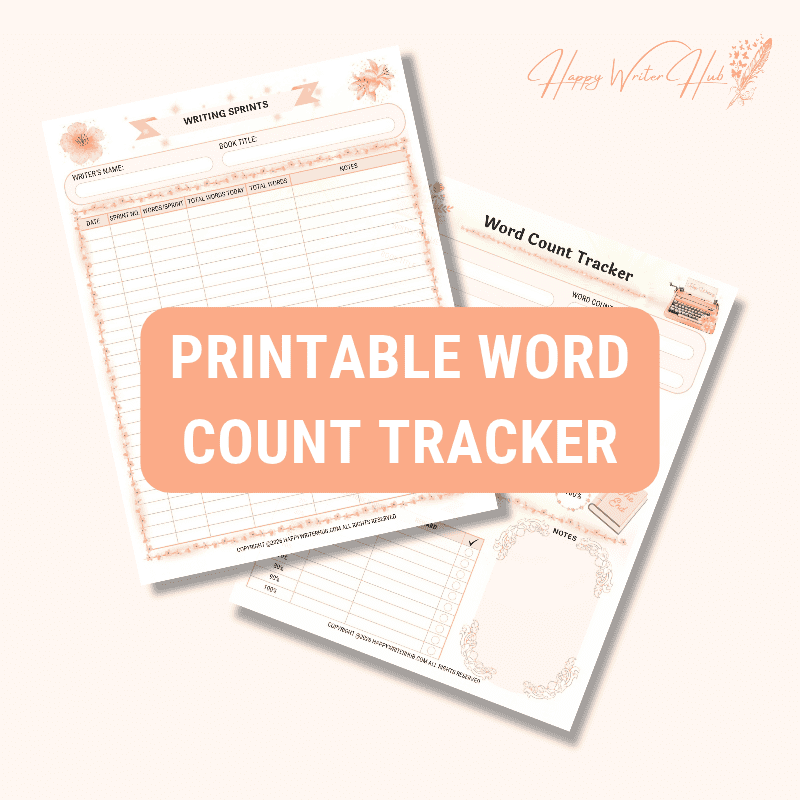
If you’re looking for a fun way to record your word count, I created a free word count tracker printable that you can use to make your writing sprints fee more special. You can download the PDF using the link in the form below.
When you break a big book project down into smaller tasks that you can complete in one day or even in one writing sprint, writing feels much less intimidating. You’ll also feel more confident in your ability to actually finish what you set out to do that day.
And the easier the task feels, and the more confident you feel about it, the easier it will be to actually sit down and get those words written. So choose a small word-count goal that still makes you feel like you’re making progress, but doesn’t overwhelm you to the point where the task feels too big to even begin.
This post was all about writing faster so you can finish your manuscript. If you enjoyed it, you might also enjoy this post:
How to Be a Confident Writer and Stop Doubting Your Writing Abilities
Now it’s your turn. What are your tips for writing faster? Let me know in the comments.





Leave a Reply