
Have you ever wondered how Stephen King manages to write and publish so many incredibly long and successful bestselling novels? Wish you could do the same? It’s not magic—it’s discipline and cultivating the right habits. Today, dear happy writer, we’ll learn how to become more productive writers by studying the writing habits of famous authors. We’ll peek into the daily routines of prolific authors and uncover the secrets to their creativity, productivity, and enjoyable writing sessions.
This post is all about the writing habits of famous authors. Whether you’re constantly struggling with a hectic schedule or the occasional, frustrating experience of writer’s block, you can easily borrow and apply these habits to fit your life. Let the masters inspire you and teach you how to become a more productive writer.
If you prefer the video version, check out the YouTube video below to learn from the writing habits of famous authors.
Consistency from daily word count goals
We’re starting the journey into the writing habits of famous authors with my favorite author—Stephen King. I love his writing style and how he brilliantly portrays the complexities of human psychology in his many, many novels. But what’s his secret for being so incredibly productive?
Consistency!
With novels like The Stand, It, and Under the Dome (my favorite Stephen King book)—all longer than 1,000 pages—consistent writing is absolutely crucial. Such massive projects demand dedication, consistent work, and a commitment to keep going until you reach the finish line.
Stephen King writes 2000 words (or 6 pages) per day, every single day. He makes no exceptions, not even on Christmas Day or on his birthday. Here’s the perfect role model to follow if you want to have a successful writing career!
I’m not saying you have to write 2000 words a day. What I am saying is that it’s helpful to be consistent in your writing, even if you can only write 200 words a day. Just keep the momentum going so you can move closer to your goal of writing a book!
I know that compared to Stephen King, many writers have far less time to dedicate to writing. A full-time job, family commitments, or health concerns make it challenging to spend several hours per day writing. But maybe you can spare 15-30 minutes per day? These small writing sessions will compound over time, and bit by bit, day by day, your manuscript will grow into that full-length novel you’ve been dreaming of writing.
The key is showing up regularly.
Writing inspiration from a change in scenery
Who doesn’t love a nice, long, relaxing bath? It’s a great way to unwind and clear your mind after a stressful day. And you know what happens when you clear your mind? You make space for new ideas! That’s what helped Agatha Chriestie come up with the intricate plots of her novels. Agatha Chriestie often got new ideas for her novels from taking a bath or washing dishes. Both activities have a meditative effect on the mind, enhancing the flow of creative ideas.
Which is the weirdest place you’ve come up with ideas for your novel? Here are some more examples from other prolific authors:
- A graveyard – A bit creepy, I know. But it seemed to work for Marry Shelley, who got her inspiration for her famous novel Frankenstein during her walks through graveyards.
- A train – I can’t imagine a world without Harry Potter and all the other beloved characters from the Harry Potter novels. And it all started on a delayed train, where J. K. Rowling sketched her first ideas for the book that would eventually fill the hearts of so many children and adults. Who wouldn’t love to have that kind of inspiration? Did you just switch tabs to book a train ride? I hope it works for you!
- A castle – It was a castle in Scotland that helped inspire some of the settings in Bram Stoker’s Dracula.
- A prison cell – If you were in prison, what would you do with all that time on your hands? Miguel de Cervantes made excellent use of his prison time, beginning to write Don Quixote.
RELATED POST: Where Do Authors Get Their Creative Inspiration?
From a hot bath to a bone-chilling graveyard—inspiration may strike at any moment, any place! Have you tried any of these locations? Hopefully not the prison… But the others seem like good places to visit for some inspiration for your novels. Off you go, and don’t forget your notebook!
Productivity from outlining like a master
Okay! I know this one is a bit controversial and that some pantsers have very strong opinions about plotting. But so do plotters, and they swear by it. It’s worth giving it a try, but ultimately, choose the path that feels right for you.
Here’s the fun thing about the internet—you can easily find out the daily routines and writing habits of famous authors. Read about their practices, learn what makes them successful, and then model them.
John Grisham is an extremely successful author of legal thrillers, captivating millions of readers worldwide with bestselling novels like The Firm, The Client, The Pelican Brief, and many others. I wouldn’t mind achieving even a fraction of his success!
John Grisham relies heavily on outlines to keep his story on track. In fact, he mentions he prepares comprehensive 40-50 page outlines to have a good idea of where the story is going before he even starts writing.
An outline of 40 or 50 pages! That’s a lot of advance preparation! But does it work? Considering how successful he is, I’d say yes… Many other successful authors also rely on outlines, using them to shape their books, either in the form of a detailed roadmap or a shorter summary containing the main plot points. Give it a shot and see if outlining works for you.
Efficiency from writing sprints
We’ve talked about writing sprints before, and we’ll talk about them again because they’re a fantastic tool in a writer’s arsenal. They significantly increase your writing efficiency, allowing you to write more quickly.
The English novelist, Anthony Trollope, used writing sprints as a key component to his writing process, his impressive list of publications being all the proof we need of just how effective writing sprints can be. His approach to writing sprints was simple, but highly effective—writing in 15-minute intervals, with a target word count of 250 words for each interval. He dedicated three hours a day to this process, so if you do the math, it adds up to an impressive 3000 words a day.
Talk about efficiency! Wouldn’t you love to be able to write 3000 words a day and have one novel written in one month? Of course, we’re not all able to write 250 words in 15 minutes, but maybe some of us, slower writers (even with the sprinting) can get 250 words in 30 minutes. That’s still progress!
Short, focused bursts of creativity allow us to fully immerse in our novel, enabling us to write as much as we possibly can at maximum speed during a short period of time. Writing sprints also reduce the pressure of having to write an entire novel, keeping us focused on this writing session. And then the next one, and the next one… until the entire book is written. So writing sprints are a key ingredient to becoming a more efficient writer, all while having fun sprinting through the pages.
RELATED POST: The Pomodoro Technique for Writers
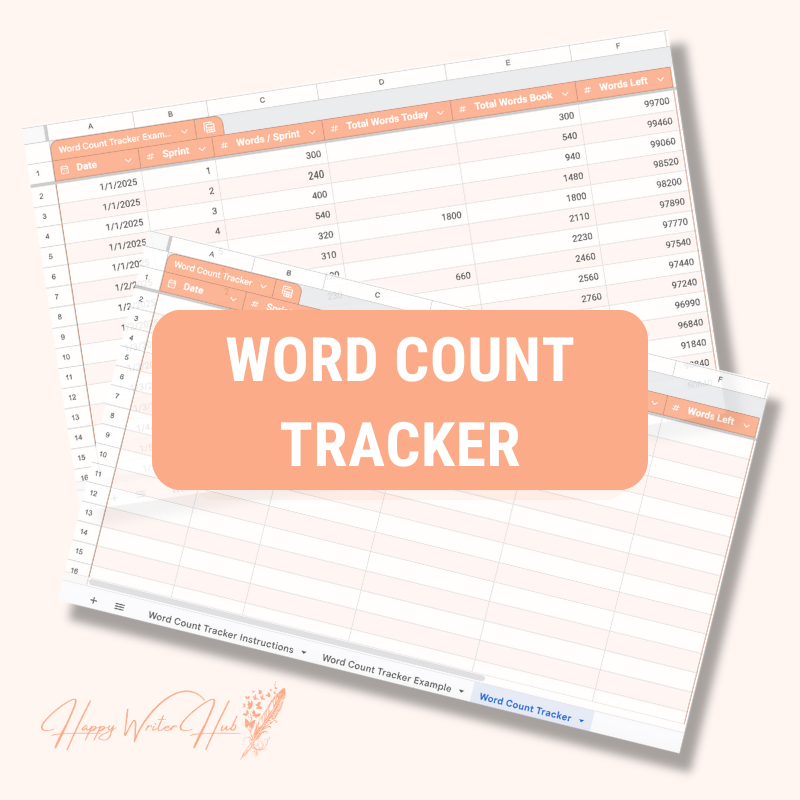
If you need help tracking your writing sprints and word count progress for your book, I have a Google Sheet Word Count Tracker that you can download for free and never lose track of your book progress again.
Work ethic from discipline and daily routine
Some writers resist discipline, thinking that it’s too restrictive, but it’s actually a crucial component of the successful career of many creatives. Talent alone isn’t enough. Many leading artists and writers attribute their achievements to their self-imposed discipline of doing the work, no matter what.
Nora Roberts credits a significant portion of her remarkable success in the publishing world to her unshakable discipline and strong work ethic. Over her long writing career, Nora Roberts published nearly 250 books under two different pen names (Nora Roberts and J. D. Robb), publishing about four books a year. She essentially juggles two writing careers, so if you want to learn how to be an exceptionally prolific author, I’d say there’s no better role model.
How is Nora Roberts so prolific? She has the discipline to sit in front of her computer and write for six to eight hours every day. And she even finds some time to write when she’s on vacation. Now that’s dedication!
Nora Roberts’s work ethic is absolutely impressive, but I realize that it’s a level of commitment that not every writer can match. Writing for six to eight hours feels completely unattainable when you work a full-time job, have a family to take care of, the dogs are begging you to take them out for a walk, and you still have to sleep and take care of your health. And please do prioritize your health, because achieving anything else on the list depends on you being well and healthy.
How can we achieve success like Nora Roberts? That depends on your personal circumstances. If you’re a full-time author, you can definitely try Nora Roberts’ writing routine. Try to cultivate a daily writing habit of six to eight hours if you can focus for that long.
Even with a busy schedule, you can still strive for strong self-discipline, adapting Nora Roberts’ work ethic to your own life. Just one hour a day, every day, dedicated solely to writing and free from distractions, can have a huge impact on your progress. Consistency and dedication are key to a successful writing career. It’s up to you how you tailor them into your own schedule and make them work for you.
Focus from chaos
And now, let’s get back to the magical world of Harry Potter! It takes an incredible amount of imagination and focus to write such a fascinating wizarding world that makes you want to be part of it. So you’d think one would have to be locked away in solitary confinement to bring this world to life.
Turns out isolation isn’t a necessary component for crafting amazing stories. J. K. Rowling wrote the first three books in the Harry Potter series in bustling cafés, proving that you can focus and connect with your muse even in the most chaotic environments. She probably would have continued writing from cafés if fame hadn’t gotten in the way! With the Harry Potter books becoming famous and her fans recognizing her everywhere she went, writing from cafés became counterproductive, leading her to find quieter writing places.
We were talking earlier about the importance of being consistent for a successful writing career. In this day and age, distractions are practically everywhere, conspiring to interfere with our focused writing sessions. Finding a way to write—even with all the noise and distraction of a café—will help you stay consistent in your writing.
J. K. Rowling’s inspiring journey shows us that a writer’s success doesn’t come from finding the ideal, quiet environment for writing. It comes from cultivating the discipline to write effectively regardless of your surroundings, proving that the ability to write anywhere is paramount to success. If she was able to create an entire magical world in the middle of a noisy café, then surely we could also find the focus we need to create our own captivating worlds and characters.
This post was all about the writing habits of famous authors. If you enjoyed it, you might also enjoy this post:
How to Write a Book While Working a Full-Time Job
Now it’s your turn. Let me know in the comments which famous author-inspired writing habits you incorporate into your own writing.





Leave a Reply