
This post is all about overcoming the mental blocks that keep writers stuck so you can push through and write your book with clarity, confidence, and joy.
Oftentimes, the biggest obstacles in writing don’t come from issues with the story itself, but from the mental blocks that are holding us back. Our fears, self-criticism, and procrastination prevent us from either starting to write or keeping a consistent writing routine.
Today, dear happy writer, we’re going to face these mental blocks head-on. Let’s work together to turn fear, perfectionism, self-doubt, and overthinking into something way less scary that no longer holds us back from achieving our writing dreams.
This post is about overcoming the mental blocks (the internal obstacles) that keep us stuck and stop our creativity from moving forward. In the next post, we’ll tackle the external obstacles that interfere with our writing goals.
If you prefer the video version, check out the YouTube video below to discover the top mental blocks keeping writers stuck and tips on how to overcome them.
Mental block #1: Perfectionism
Perfectionism can quietly creep up behind you, influencing everything from writing your first draft to refining all your future drafts.
The impact of perfectionism on the writing process
First, when you’re a perfectionist, you want everything to be…. well… perfect from the very beginning. But when you’re writing your first draft, if you expect it to be perfect from the start, it will only hold you back. Not only will it slow your progress, but it will also take the joy out of the writing process. And that’s the last thing you want.
You’re writing a book because you’re excited about the story you want to share. You love your characters and want them to go on the adventure of their lifetime. But perfectionism makes you doubt every word you write, constantly whispering that you could do better. And maybe you can. But leave that for the revisions.
When you’re drafting, embrace curiosity, experimentation, and playfulness. Instead of trying to make your first draft perfect, just call it a “discovery draft” and have fun with it. Explore different ideas, create playful scenarios, and make mistakes—this is where the magic begins.
Perfect can wait. Right now, it’s time to play.
Perfectionism challenges in the editing process
Everyone has to edit their first draft to get it into the right shape for publication. Often, that means going through several rounds of developmental edits, copy and line edits, and finally, proofreading to catch those last minor errors. But at some point… all of that has to stop.
Perfectionism can trap you in an endless editing loop because it makes you think that your book has to be perfect before you send it out for publication. So you go round… and round… and round again in editing cycles, never feeling brave enough to finally press “publish”.
But while you wait for your manuscript to be perfect, another author will have published their book, gotten feedback from readers, and learned how to make their future books better.
So set a limit for the number of drafts you’ll allow yourself, and trust that your readers will forgive a few minor mistakes.
I once found a pretty big science-related error in a book by one of my favorite authors. Did I stop reading his books or think less of him or his writing? Of course not! I love his books, and I still read them with great excitement, eager to discover the new adventures he creates for his characters.
Remember “done is better than perfect,” and keep going.
Mental block #2: Comparing yourself to famous authors
I’m a new writer, but I’ve been reading books all my life. I love books. So of course, I want my books to be as good as the ones I love to read. And I’m sure you feel the same way. You want your readers to enjoy your stories just as much as you enjoy the books written by your favorite authors.
But once again, our mindset about the first draft can become a big roadblock between us and the story we want to bring to life.
When writers compare their rough drafts to someone else’s polished masterpieces, it can only lead to trouble. We’ve talked about first drafts before, when we looked at the writing habits of prolific authors. Even the most famous authors know that their first draft is not the final book. It’s simply the foundation they’ll build on to get to the publishable version.
RELATED POST: Inspiration from the Writing Habits of Famous Authors
But our inner critic makes us criticize our writing, doubt our ability to finish the manuscript, and wonder why our draft doesn’t sound as great as a published bestseller from our favorite writer.
Don’t listen to that discouraging voice and remember that the first draft is for your eyes only. It’s just you putting your ideas together and figuring things out. So take it lightly and expect that the quality won’t match that of the books you read. And that’s perfectly all right.
Nobody will see it, nobody will judge it, and nobody will compare it to other published books. Unless you accidentally publish your first draft… So don’t stress about your first draft—just write, explore, and enjoy the creation process!
Mental block #3: Waiting for inspiration instead of building momentum
Many writers wait for a lightning bolt of inspiration. But lightning is unreliable. If you’re waiting for inspiration to strike, it could take days, weeks, or even months. So instead of waiting for it to show up, why not chase it yourself?
Create your own writing inspiration and motivation. How do you do that? By remembering why you write, creating a fun and playful writing ritual, and visualising your dream of holding your published book in your hands. Your muse joins you faster when you reconnect with your writing purpose, revisit your goals, and make writing fun—much faster than if you were just sitting around waiting for it to visit.
Recommended reading: Start With Why by Simon Sinek.
By taking matters into your own hands, you’re replacing the stress of “Where’s my inspiration?” with a joyful ritual that builds momentum. By using tiny, consistent habits, you make sure that your muse comes when you call her and not just when she feels like showing up.
And once these habits are in place, you’ll be able to write even when you don’t feel like writing.
Mental block #4: The “I don’t know enough yet” syndrome
Of all the mental blocks, this is the toughest one for me.
A common issue for writers, especially new writers like myself, is the idea that “I’ll start writing once I learn everything.” Obviously, it’s important to learn about story structure, character development, and what makes good writing. But at some point, we have to put the craft books down and actually start writing.
My number one Clifton Strength is Learner. I LOVE LEARNING! So for me, it’s especially difficult to figure out when I’ve learned enough so I can start writing. I feel like there’s always more to learn so I can write a good book. And I’m sure that many other writers face these problems. We want to write a good book, so of course, we need to learn how to write a good book. But for us to write and publish that book, we have to actually write it. And that’s not happening while we hide behind all the craft books we can get our hands on.
We have to trust that we’ve learned enough and start writing. But here’s the thing. We will never know everything. There will always be more to improve, more to study, and more to figure out. Yet, the best way to improve your writing is by starting with the knowledge you already have—and learning the rest along the way. That’s how skill is built. Knowing something theoretically is not enough to master the craft. We have to do it over and over again.
And with every book you write, you learn more and you become more skilled as a writer. Your first book will make the next one better, and that one will make the next one even better. So while you will never know everything, you absolutely know enough to start. And the more you write, the more you will understand what makes a great book truly great.
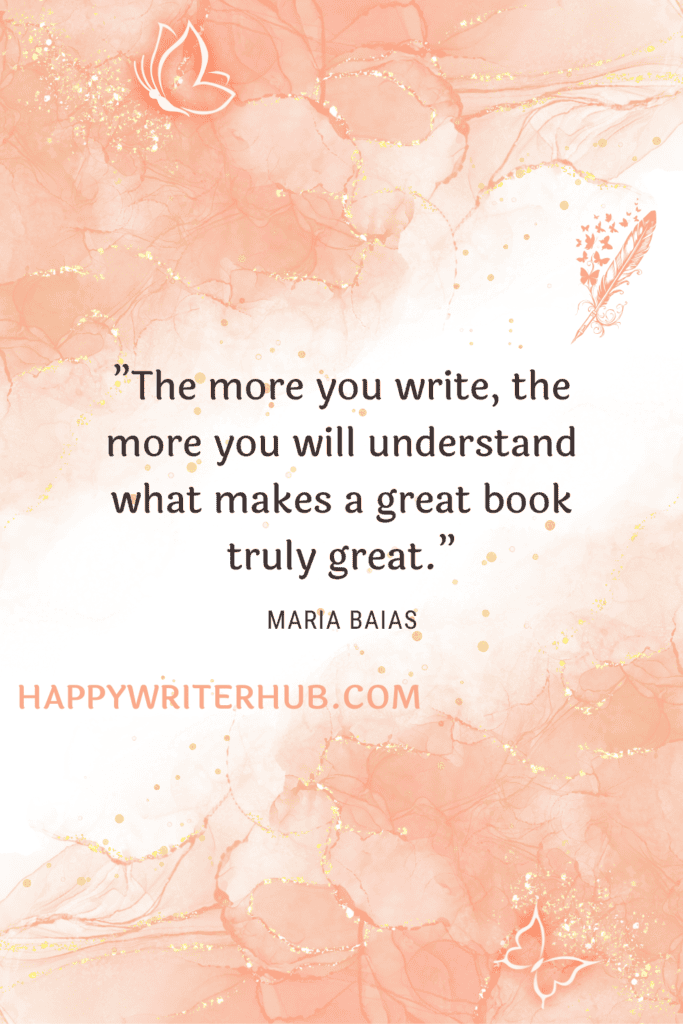
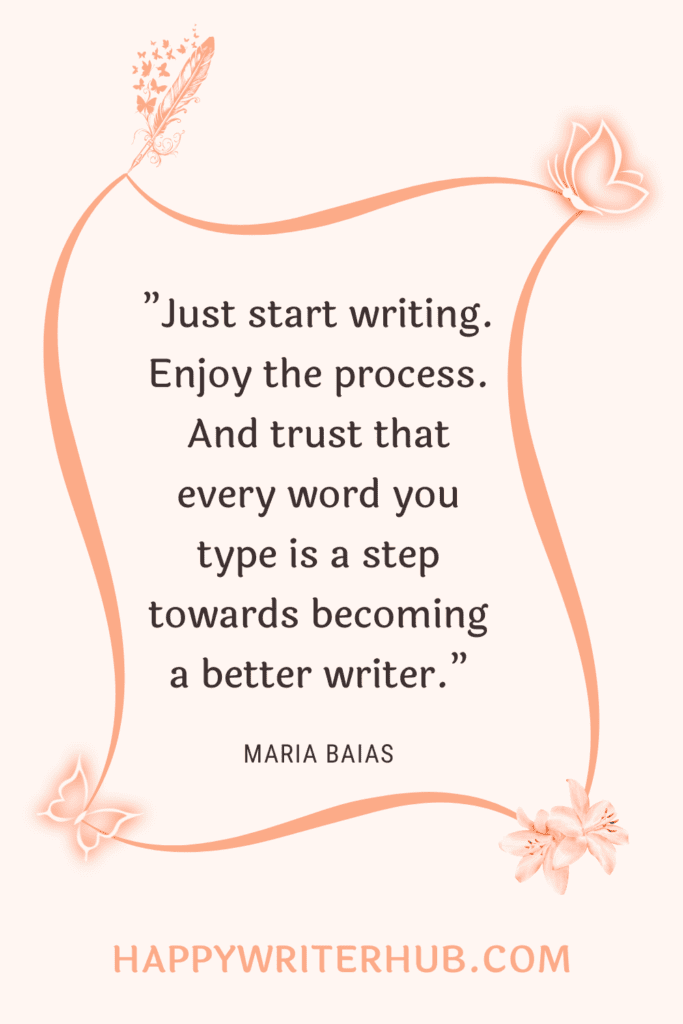
So here’s my advice to you—and to myself: just start writing, enjoy the process, and trust that every word you type is a step towards becoming a better writer. And you can always read more craft books as you write. Just make sure you continue to make progress on your manuscript.
Mental block #5: Being too serious about writing
Have you ever sat down to write and felt like it was something you had to do, not something you wanted to do? When did writing become a chore instead of something you looked forward to?
When you first started writing your book, you were excited about the story and all the adventures you were envisioning for your characters. So you wrote with joy and excitement. You couldn’t wait to get to your laptop and start typing. But somewhere along the way, that excitement dimmed, and writing turned into a burden.
So what happened?
Maybe you put too much pressure on yourself to write the perfect novel. In that case, revisit mental block number one and don’t worry so much about making it perfect. Explore new ideas for your story, for your character arcs, and let your curiosity and playfulness lead the way. Use that newfound energy to reignite your passion for your story.
Or maybe you just became too serious about being a writer. You started treating writing like a job instead of your creative expression. Sure, writing can be a job, especially if you’re a full-time author and you need to earn money from your writing. But don’t let that added pressure make you forget why you started writing. Remember how fun it is to join your characters on wild adventures. And remember that anything is possible in the pages of a book—so let yourself enjoy that freedom.
If you need a little help, check out the free downloadable file in the form below with the “WHAT IF” game. It’s a set of playful writing scenarios to reignite your creativity and remind you of how much fun writing can be when you treat it like exploration rather than an obligation.
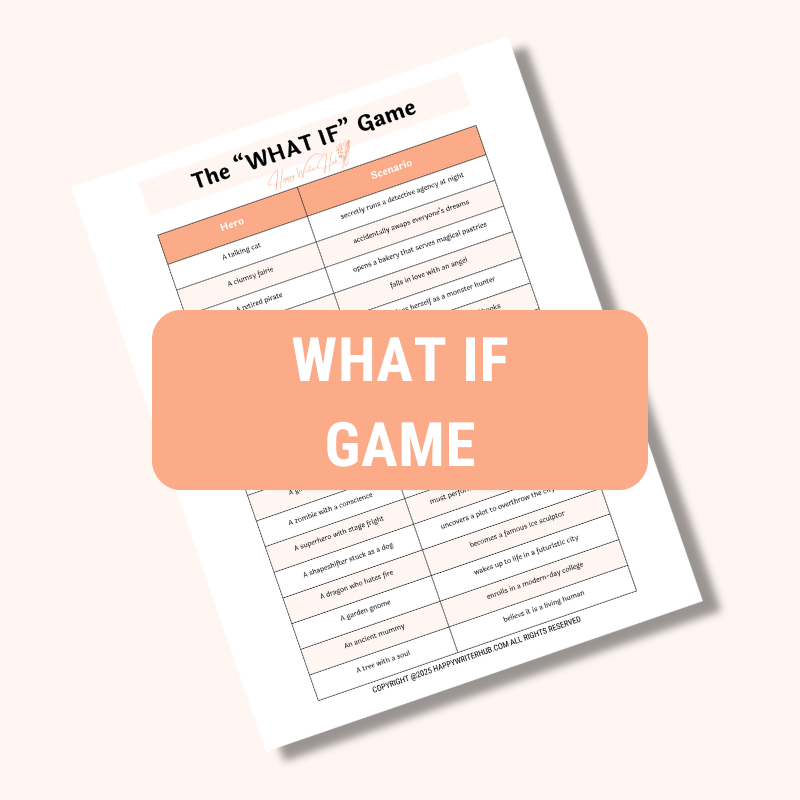
Because pressure kills creativity. When writing becomes a serious mission instead of joyful play, your brain simply shuts down, and writing is no longer fun. So show up with more lightness, curiosity, and a playful attitude to make writing fun again.
This post was all about the mental blocks that keep writers stuck. If you enjoyed it, you might also enjoy this post:
How to Stay Motivated to Write Without External Validation
Now it’s your turn. Let me know in the comments which are the toughest mental blocks for you. What tips do you have to overcome them?




Leave a Reply